Why I Developed the Impression Box Pro
In forensic investigations, evidence collection is only as strong as the methods used to document it. I learned this lesson firsthand during a homicide investigation where I served as the lead investigator—an experience that ultimately led to the development of the Impression Box Pro.
During that investigation, tire impressions at the crime scene were identified that I believed were consistent with those recovered from a suspect vehicle. Proper photographic documentation of those impressions was critical, as impression evidence often plays a key role in associating a suspect, a vehicle, or an object with a scene.
I assigned a crime scene investigator to photograph the impressions. Unfortunately, despite existing training and established standards for impression photography, those procedures were not followed. As a result, the images collected at the scene did not meet comparison standards.
When the evidence was later reviewed by a Department of Justice laboratory examiner, the conclusion was clear: the photographs were not suitable for comparison. The examiner was subsequently subpoenaed to testify at trial and explained to the jury that a comparison between the recovered tires and the crime scene impressions could not be conducted due to improper evidence collection.
The trial ultimately resulted in a hung jury, decided by a single juror. While impression evidence alone cannot be blamed for that outcome, the inability to present usable comparison evidence was both frustrating and avoidable. More importantly, it was a moment of professional reflection. The situation was embarrassing for the agency, not because of the effort involved, but because a preventable breakdown in the evidence collection process limited the jury’s ability to fully evaluate the facts.
That experience highlighted a critical issue in forensic work: impression evidence photography is highly technique-dependent, and even trained personnel can struggle to consistently capture comparison-quality images under real-world conditions.
I set out to develop a solution.
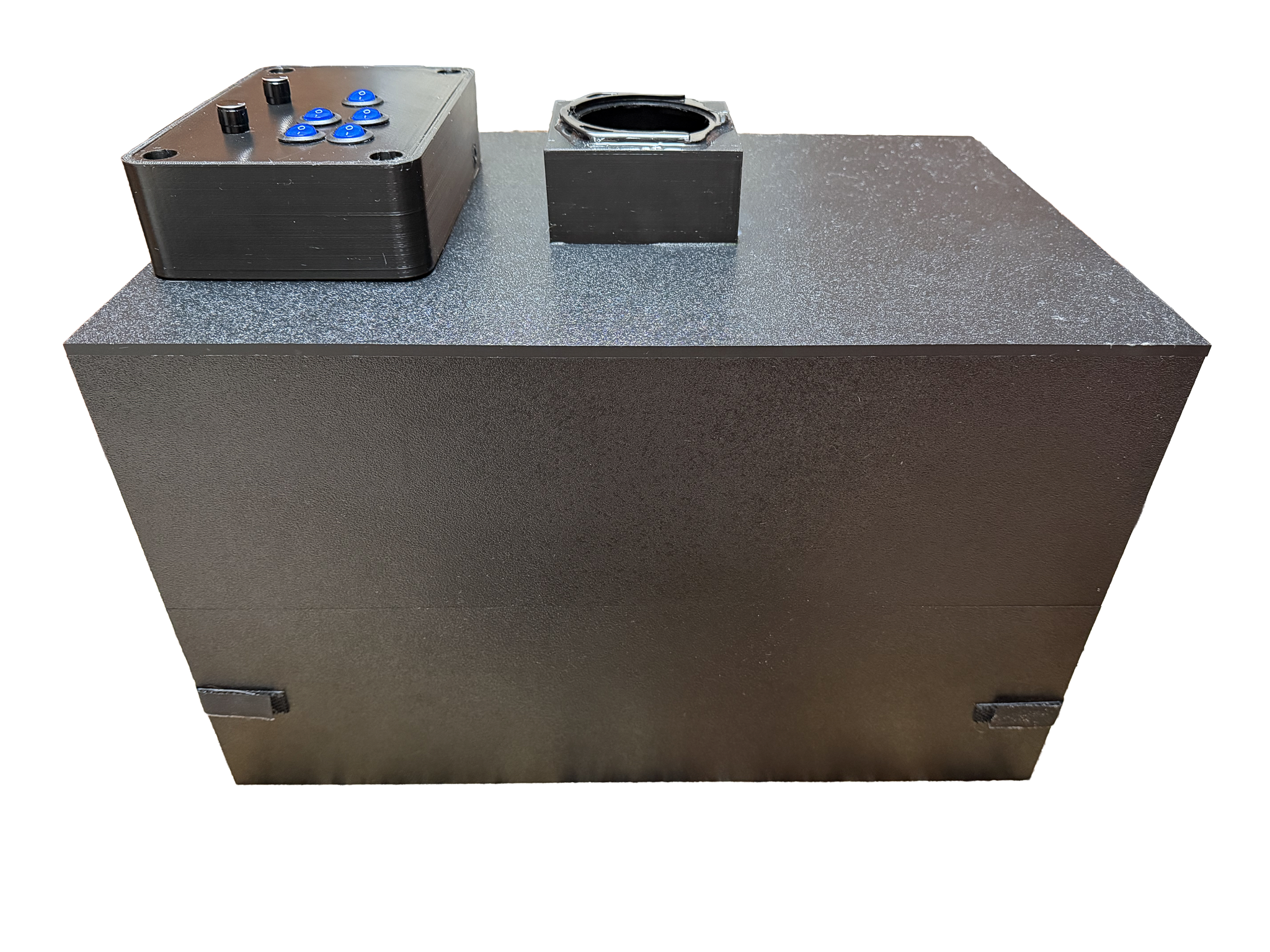
The Impression Box Pro was created with three primary goals in mind:
1. Simplify the collection of impression evidence so that correct techniques are built into the process rather than dependent on memory or experience alone.
2. Produce comparison-quality images that meet laboratory and examiner standards.
3. Reduce the time required to properly document impressions at a crime scene without sacrificing accuracy or quality.
2. Produce comparison-quality images that meet laboratory and examiner standards.
3. Reduce the time required to properly document impressions at a crime scene without sacrificing accuracy or quality.
Rather than relying solely on individual training or ideal conditions, the Impression Box Pro is designed to guide proper photographic alignment, lighting consistency, and scale placement—critical elements that determine whether impression evidence can be analyzed later.
The motivation behind the Impression Box Pro was not product development for its own sake. It was born of a real investigative failure—one I experienced personally and one I believe many investigators and crime scene technicians have encountered in some form.
My goal is simple: to help ensure that when impression evidence is located at a crime scene, it is collected in a way that preserves its full evidentiary value—so that investigators, examiners, prosecutors, and juries are never left wondering what could have been shown if the evidence had been captured correctly.